

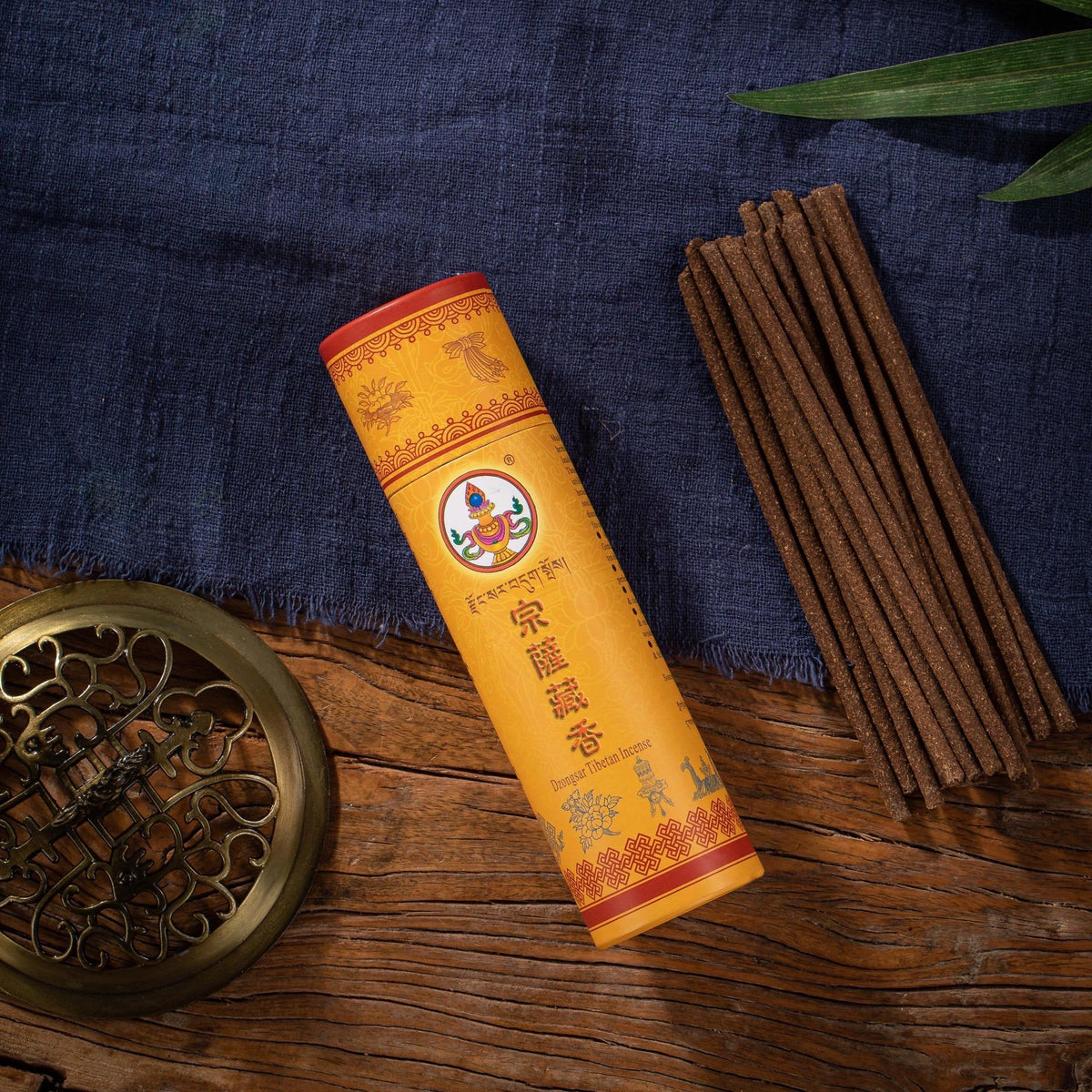
Both come as sticks, both are used for prayer and meditation, and both are sold side by side. But Tibetan and Indian incense are made differently, smell different and burn differently. Here is what to expect from each.
How they are made
Tibetan incense
Tibetan incense is usually a solid stick with no bamboo core. Powdered herbs, woods and resins are mixed into a dough, pressed or extruded into sticks and dried. Common ingredients include juniper, sandalwood and many Himalayan herbs, and some recipes are based on traditional Tibetan medicine. Much of it is made by monasteries or small workshops in Tibet, Nepal, Bhutan and Tibetan communities in India. The sticks are often thicker and break easily, so they usually come in sturdy wrapping.
Indian incense
Most Indian incense is hand-rolled onto a thin bamboo stick. In masala incense, a paste of ground herbs, resins, woods and binders is rolled onto the bamboo; in charcoal or "dipped" incense, a plain blank is dipped in fragrance oil. Nag champa is a famous masala style, built around champaca flower with sandalwood and resins.
Scent and smoke
- Tibetan: earthy, woody, herbal and slightly medicinal; rarely sweet. The smoke is often gentle, and the scent stays close to the room rather than filling the house.
- Indian masala: warm, sweet and floral, often with sandalwood, amber or champa notes. Rich and long-lasting.
- Indian dipped: strong, perfumed, and more varied in scent, but the smoke can feel heavier.
Tibetan and Indian incense
Herbal sticks and masala incense from our Incense collection.


Burning and holders
Indian sticks have a bare bamboo end that fits most holders and ash catchers. Tibetan sticks have no handle, so they need a holder with a small hole, a bed of sand or ash, or a lidded incense box; lay them flat or stand them upright, but do not lean them against wood or paper. Burn times vary with thickness and length: for example, a 23 cm (9 in) hand-rolled Indian stick may burn for 35–50 minutes, while Tibetan sticks of about 12–22 cm (5–9 in) burn for a shorter or longer time depending on their thickness. See how to burn Tibetan incense for holders and safety.
How to choose
- For a Tibetan Buddhist altar or practice: Tibetan incense is the traditional choice.
- For a soft, natural scent or a small room: Tibetan herbal sticks.
- For a familiar, sweet "meditation" scent: Indian masala such as nag champa or sandalwood.
- If you are sensitive to smoke: start with a short piece of Tibetan incense and keep the room aired.
Not sure about the forms? Read types of Tibetan incense. Store all incense sealed, dry and away from sun so it keeps its scent.


