

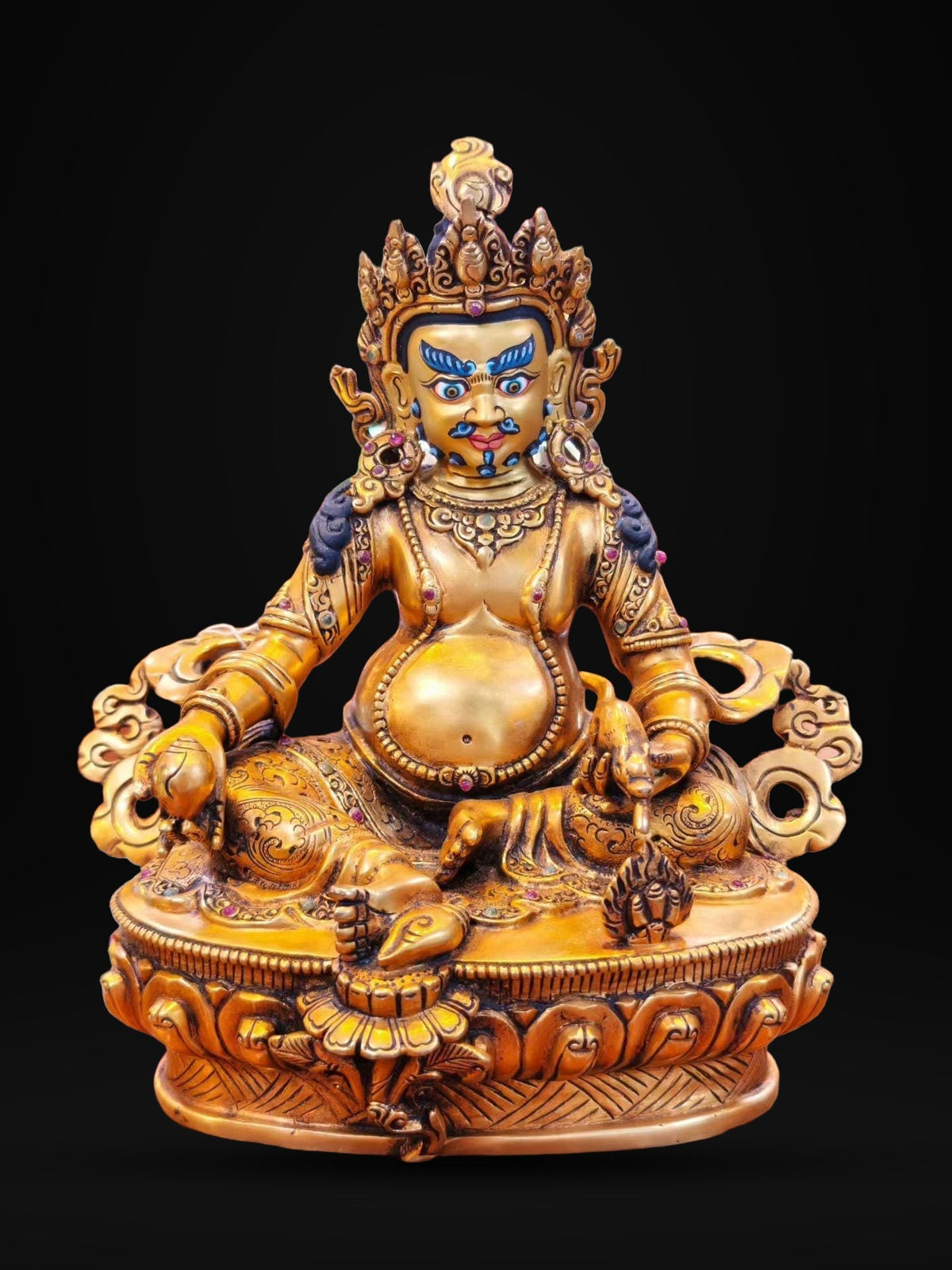
Jambhala (also spelt Dzambhala or Zambala) is the best-known wealth deity in Tibetan Buddhism. There are five main forms, each with its own colour, posture and character. Knowing the differences makes it much easier to choose a statue or tsa tsa.
What the Jambhalas represent
In Tibetan Buddhism, wealth deities are usually explained not as a promise of money but as support for generosity: having enough to live well, to give to others and to practise without worry. Jambhala is often shown holding a mongoose that spits jewels, a symbol of wealth being released and shared.
The five forms
Yellow Jambhala
The most common form. He is round-bellied and seated, with his right foot resting on a conch or lotus. He holds a jewel or citron fruit in his right hand and a jewel-spitting mongoose in his left. Peaceful and approachable, he is the usual choice for a home altar.
Black Jambhala
A wrathful, dark blue-black form, usually standing on a figure lying beneath his feet. He holds a skull cup and a mongoose. He is commonly associated with removing obstacles to prosperity and with protection.
Red Jambhala
Red in colour, often shown with a consort and holding a mongoose. He is commonly linked with magnetising, that is, drawing favourable conditions together.
White Jambhala
White, riding a snow lion or dragon, and holding a staff and mongoose. He is associated with compassion and clearing hardship.
Green Jambhala
Green, usually with a consort. Less often seen as a statue, he is associated with removing obstacles in the same way Green Tara is associated with swift help.
Jambhala statues and tsa tsas
Yellow, Black and Red Jambhala from our Buddha Statue collection and Tsa Tsa collection.


How to choose
- First wealth deity, or for a family altar: Yellow Jambhala.
- For protection as well as prosperity: Black Jambhala. Some people prefer to keep wrathful forms on a dedicated shrine rather than a living room.
- To wear: a hand-painted tsa tsa in a gau box or sealed case. Double-sided pendants with Yellow and Black Jambhala are popular. See which tsa tsa pendant to choose.
- Size: a statue of about 10–20 cm (4–8 in) suits a shelf altar; 25–30 cm (10–12 in) works as the main figure on a larger shrine.
- Material: gilded copper is the traditional finish; painted copper shows the deity's colour. See Buddha statue materials.
Placement and offerings
Place Jambhala at or below the level of a buddha on the same altar, facing into the room. A common offering is a small bowl of clean water; some traditions pour water over a Jambhala statue as part of practice, so choose metal rather than painted clay if you plan to do this. Keep the area clean and avoid placing the figure on the floor. For altar layout, see how to choose offering bowls.


