

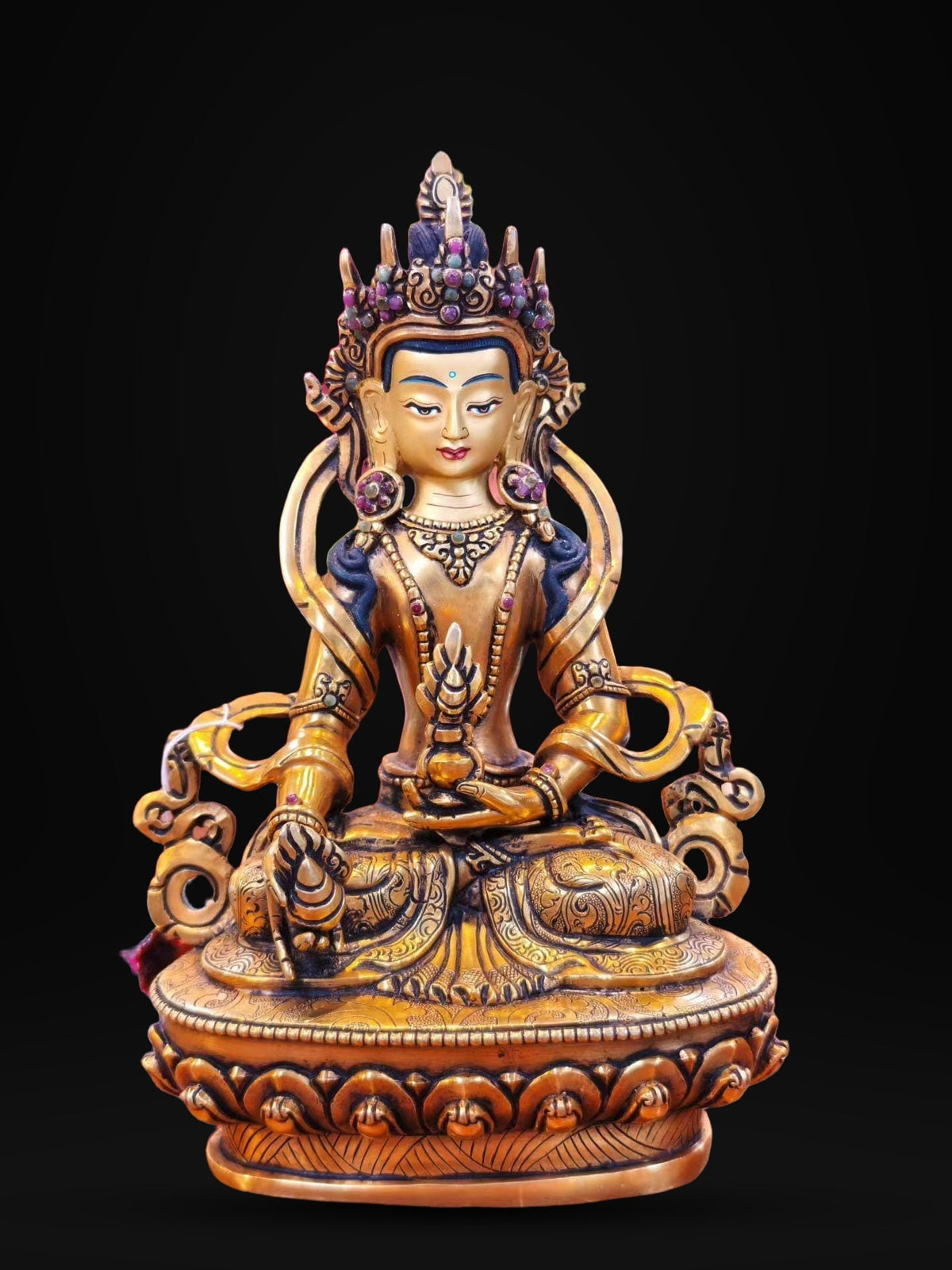
Ksitigarbha, known as Dizang in Chinese and Jizo in Japanese, is one of the most loved Bodhisattvas in East Asia and also appears in Tibetan art. His statues are often chosen for remembrance altars and family shrines. Here is how to recognise him and choose a statue.
Who Ksitigarbha is
His name is usually translated as "Earth Store" or "Earth Womb". He is best known for a great vow, commonly summarised as not seeking final Buddhahood until the hell realms are empty. For this reason he is widely associated with care for beings in difficult rebirths, with the recently departed and, in Japan, with travellers and children.
In Tibetan Buddhism he is counted among the Eight Great Bodhisattvas, the close disciples who often surround Shakyamuni in paintings.
How to recognise him
- Monk's form: in Chinese and Japanese art he is usually a shaven-headed monk in simple robes, unlike most Bodhisattvas who wear crowns and jewels. Some forms show him with a five-leaf crown.
- Wish-fulfilling jewel: held in his left hand, commonly explained as lighting the way in darkness.
- Staff: a monk's staff with rings (khakkhara) in his right hand, said to open the gates of difficult realms.
- Tibetan style: Nepalese and Tibetan statues may show him seated in meditation with gilded robes and a painted mandorla, still holding the jewel and staff.
Ksitigarbha statues in our shop
Handcrafted copper statues from Nepal, gilded or painted. Browse more in our Buddha Statue collection.


Gilded or painted?
- Gilded: fully gold-covered copper with a painted face gives a calm, unified look and suits a shrine with other gilded images.
- Painted: mineral-pigment details and a coloured halo add warmth and detail, and stand out as a single main image.
Choosing a size
- Shelf or remembrance corner: about 22 to 28 cm (8.7 to 11 in) tall fits a small altar beside a photo and a lamp.
- Main image of a family shrine: about 37 cm (14.6 in) gives presence without crowding offering bowls.
- Shrine room: 55 cm (21.7 in) and larger reads well from across a room.
Placement and care
Place the statue on a clean, raised surface, ideally at or above eye level when seated. Many families set Ksitigarbha near photographs of departed relatives together with a light and fresh water. Dust with a soft brush and avoid polish on gilded or painted areas.


