

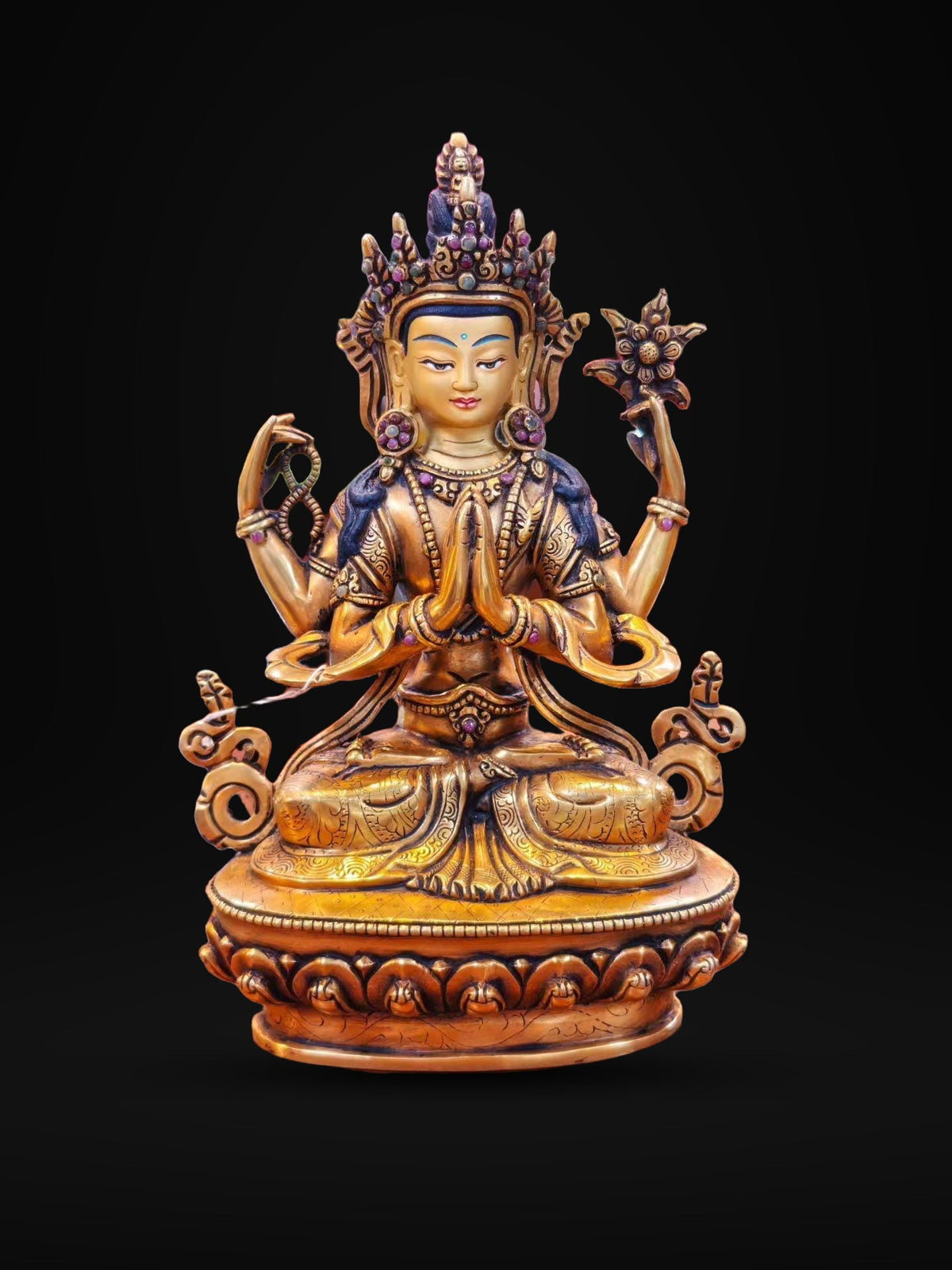
Chenrezig is the Tibetan name for Avalokiteshvara, the bodhisattva of compassion. He is one of the most loved figures in Tibetan Buddhism, and his six-syllable mantra, Om Mani Padme Hum, is carved on stones and printed on prayer flags across the Himalayas. Statues of him come in several forms, so this guide explains how to tell them apart and how to choose one for your home.
Four-Armed Chenrezig
This is the form most often seen on Tibetan altars. Look for:
- A white body, seated in full lotus on a lotus base.
- Two front hands pressed together at the heart, holding a wish-fulfilling jewel.
- The upper right hand holding a crystal mala, and the upper left a lotus flower.
- Often a deer skin draped over the left shoulder.
A common explanation is that the four arms stand for the four boundless qualities: love, compassion, joy and equanimity. The mala is linked to reciting his mantra, and the lotus to a mind that stays pure in the world.
Thousand-Armed Chenrezig
This standing form has eleven heads stacked in tiers and a large halo of arms, usually with an eye in the palm of each hand. A well-known story tells that his head shattered from grief at the endless suffering of beings, and Amitabha Buddha remade it as eleven heads and gave him a thousand arms to help. Buyers usually choose this form for its strong sense of active, reaching compassion.
Chenrezig and Guanyin
Guanyin is the East Asian form of the same bodhisattva. Chinese images often show a graceful, robed figure, sometimes holding a vase or seated in the relaxed "Water-Moon" pose. If you prefer a softer, flowing style, a Guanyin statue may suit you; if you follow Tibetan practice, the four-armed form is the traditional choice.
Chenrezig Statues and Pendants
Four-armed and thousand-armed forms, from altar statues to a wearable tsa tsa. Browse more in our Buddha Statue collection.


How to choose a Chenrezig statue
Size
- Around 10 to 18 cm (4 to 7 in): fits a shelf, desk or small travel altar.
- Around 25 to 40 cm (10 to 16 in): a good centrepiece for a home altar.
- Above 40 cm (16 in): for a dedicated shrine room or larger altar.
Measure the space first, including height above the statue, so it does not look crowded.
Material and finish
Gilded copper gives the classic Nepalese look with a painted face; plain brass or bronze is more understated and usually more affordable. Our guide to Buddha statue materials compares the options and their care.
Statue or pendant
If you want Chenrezig with you through the day, a small tsa tsa pendant in a gau box is a traditional alternative to an altar statue. Our tsa tsa guide explains how they are made and kept.
Placing and caring for the statue
- Place it in a clean spot at or above eye level, never on the floor.
- Keep it away from direct, steady sunlight and damp areas.
- Dust gently with a soft, dry brush or cloth; avoid polishes on painted faces.
For more on setting up an altar, see how to choose a Buddha statue for your home.


