

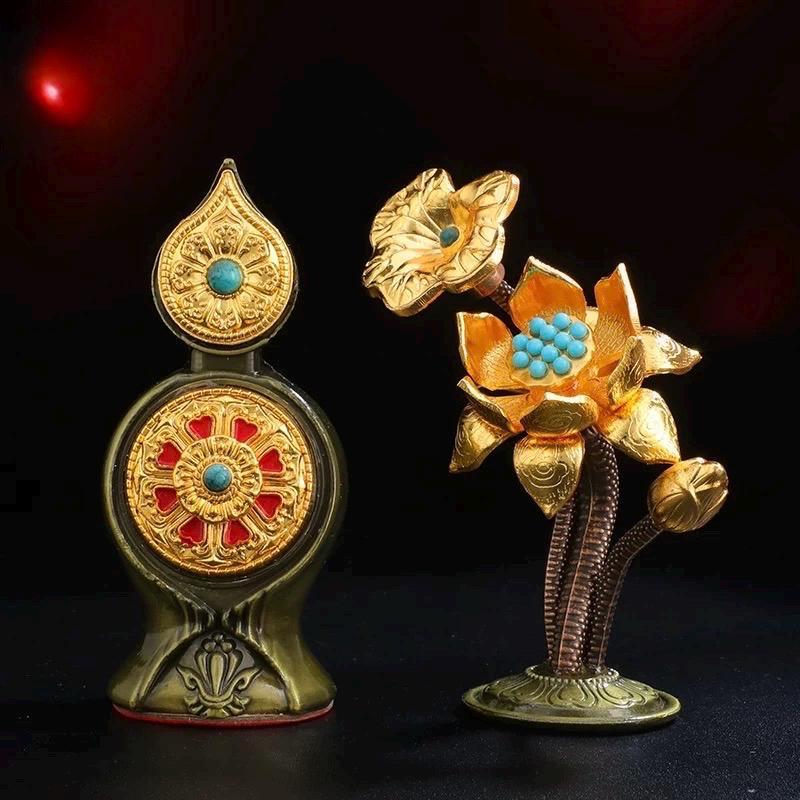
On many Tibetan altars you will see small cone-shaped offerings decorated with coloured discs and flower-like ornaments. These are tormas. Here is what they are, and how to choose a lasting torma ornament for a home shrine.
What a torma is
A torma (Tibetan gtor ma) is a ritual offering cake. Traditionally it is shaped by hand from roasted barley flour and butter, then decorated with coloured butter. Shapes vary a great deal: different practices and deities use different forms, and in monasteries tormas are made for specific rituals and later replaced.
A torma is commonly explained as an offering of food and of the senses' enjoyments to the Buddhas, protectors or other guests of a practice. Exactly which torma a practice needs is usually explained by a teacher, so for a specific sadhana it is best to ask.
Why many homes use permanent tormas
Dough tormas need regular remaking and can attract insects or spoil in warm climates. For this reason many temples and households keep lasting replicas in brass, copper or resin as part of the standing altar display, alongside offering bowls and a lamp.
Torma or butter flower?
- Torma: the main offering, usually a cone or teardrop shape on a round base, decorated with coloured discs.
- Butter flower: a decorative ornament, often shaped like a flower or flame, that traditionally accompanies a torma. Many sets pair one of each.
Torma ornaments in our shop
Handmade brass from Nepal and lightweight painted resin. See more altar offerings in our Offering Bowl/Cup collection.


Brass or resin?
- Brass: heavier and very durable, often handmade in Nepal with coloured inlays. It suits a permanent altar and can be passed down.
- Resin: light, painted and more affordable. It is decorative only and should be kept out of strong sun and heat.
Choosing a size
Match the torma to your offering bowls and main image. On a small shelf altar, ornaments about 8 to 10 cm (3 to 4 in) tall sit comfortably beside bowls of a similar height. On a larger altar, 12 cm (4.7 in) pieces read better from a distance. The torma should stay lower than the face of the statue.
Placement and care
- A common arrangement is to place the torma in front of the main image, on the same level as or just behind the row of offering bowls.
- Set it on a stable surface, away from lamp flames.
- Dust brass with a soft dry cloth; avoid harsh polish on painted or inlaid areas.
- Dust resin with a soft brush, and never soak it.
A permanent torma keeps the altar complete every day, while your teacher can guide you on any dough tormas a particular practice may call for.


