

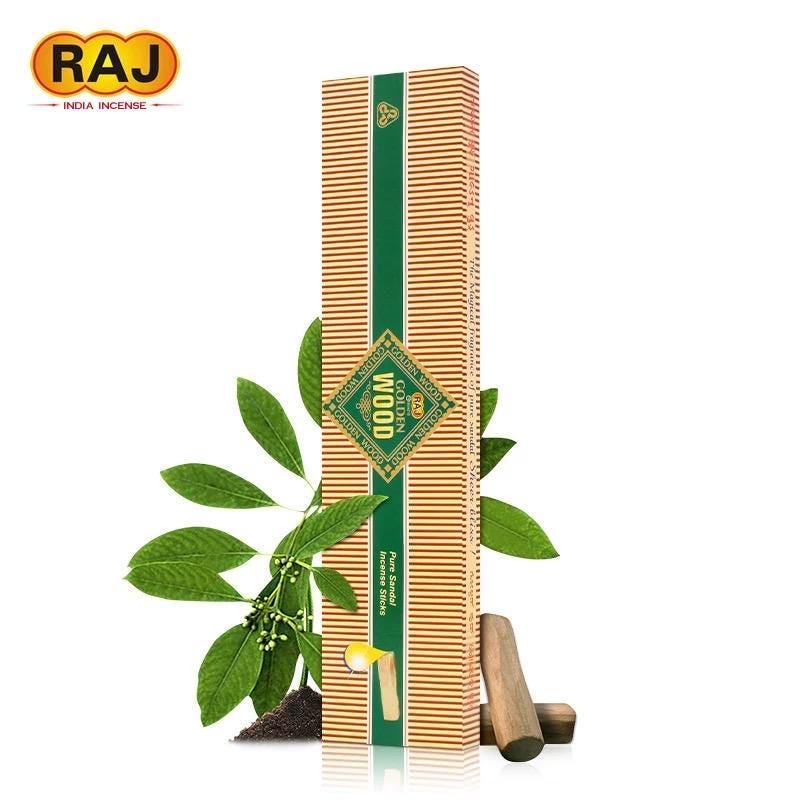
Sandalwood and agarwood are the two woods people ask about most when buying incense. Both have long histories in Buddhist and wider Asian incense traditions, but they smell different, cost different amounts and suit different moments. Here is a plain comparison.
What each one is
Sandalwood
Sandalwood comes from the fragrant heartwood of Santalum trees. Its scent is usually described as soft, warm and creamy, with a gentle sweetness. It is easy to like on first try, which is why it is so common in everyday incense.
Agarwood
Agarwood, also called oud or chenxiang, is a dark, resin-rich wood that forms in Aquilaria trees. The common explanation is that the tree produces this resin in response to injury or infection, so only some trees develop it. Its scent is deeper and more complex: resinous, sweet, slightly bitter, sometimes smoky. Because good agarwood is scarce, and wild Aquilaria is protected under international trade rules (CITES), it is generally more expensive.
Quick comparison
| Sandalwood | Agarwood | |
|---|---|---|
| Scent | Soft, warm, creamy | Deep, resinous, layered |
| Strength in a room | Gentle | Fuller, lingers longer |
| Typical price | Lower | Higher |
| Good for | Daily offerings, beginners, small rooms | Evening sits, special occasions |
Read the label carefully
Most incense is a blend of woods, resins, herbs and a binder. A box labelled "sandalwood" or "agarwood" usually names the fragrance, not the percentage of that wood inside. Our own listings say this openly: the name on the packaging tells you the scent family, not the full recipe. If purity matters to you, look for a stated ingredient list and expect a higher price for it.
Sandalwood and agarwood incense in our shop
Two stick options and a coil box with both scents. See everything in All About Incense.


Sticks or coils?
Sticks suit a single sitting. Our Golden Wood sandalwood sticks measure 23 cm (9 in) and are listed at about 35 to 50 minutes each. Coils burn much longer and fill a larger room; the coils in our mixed box are about 7 cm (2.76 in) across. For more on forms, see our guide to types of Tibetan incense.
How to choose
- New to incense or burning daily: start with sandalwood.
- Want something deeper for evening practice: try agarwood, one stick at a time.
- Not sure: buy a small box of each and compare them on different days in the same room.
Whichever you choose, burn incense on a heat-resistant holder in a ventilated room, keep it away from children, pets and anything flammable, and never leave it unattended.


