
In the high plateaus of Tibet and across the steppes of Mongolia, there exists a tradition so gentle yet profound that it transcends words — the offering of a Khata
To the people of the Himalayas, this luminous scarf is more than a simple gift. It is a sacred symbol of purity, goodwill, and the transmission of blessings from one heart to another.
The Meaning and Essence of the Khata
The Khata is traditionally a silk or gauze scarf, most often white, representing a pure mind and a sincere heart.
It carries no demand and no expectation — only an offering of kindness, respect, and auspicious wishes.
To offer a Khata is to say silently, “May you be happy, may your path be blessed, may all obstacles be removed.”

Historical Origins
The custom of presenting silk offerings has its roots in ancient India, where devotees offered fine cloth to the Buddha and to their teachers as a sign of reverence.
When Buddhism spread to Tibet, this practice evolved into the Khata — a graceful way to show respect both in spiritual contexts and daily life.
Over time, the Khata became woven into every layer of Tibetan culture — from temple rituals to the simplest acts of kindness between friends.
When and How a Khata Is Offered
The Khata appears at nearly every significant moment in life, its white threads carrying the continuity of compassion and good fortune.
-
Welcoming Guests
Offering a Khata when greeting someone is the highest gesture of respect and hospitality. It conveys that your visitor brings blessings to your home. -
Honoring Teachers and Elders
Disciples present Khatas to their spiritual masters or elders to express gratitude and humility. It is often accompanied by a bow or the gesture of placing the scarf with both hands. -
Prayers and Pilgrimage
At sacred mountains, rivers, and temples, devotees tie Khatas to shrines, trees, or stupas. The fluttering fabric becomes a living prayer — the wind carrying their aspirations to the heavens. -
Festivals and Life Events
From weddings and births to farewells and funerals, the Khata is ever-present, blessing beginnings and honoring endings.
Colors and Their Symbolism
While the white Khata is most common, other colors are also used, each representing one of the Five Elements or the Five Buddha Families:
| Color | Symbolism |
|---|---|
| White | Purity and peace |
| Blue | Sky, vastness, and wisdom |
| Yellow | Earth and prosperity |
| Red | Fire, vitality, and compassion |
| Green | Water, nature, and balance |
During grand ceremonies, five-colored Khatas are offered together, representing the harmony of all elements in the universe.

How to Offer a Khata Respectfully
- Hold the Khata with both hands, palms open, thumbs inward.
- Bow slightly while presenting it, keeping your mind calm and sincere.
- When receiving a Khata, accept it with both hands and a gentle nod of gratitude.
In monastic or formal settings, the Khata is often draped over the recipient’s shoulders or placed at the feet of a sacred image as a gesture of devotion.
Beyond Fabric — The True Offering
A Khata’s value is not measured by its material or color but by the intention behind it.
Whether you are greeting a teacher, making an offering at a shrine, or sending blessings to a loved one, the Khata is a bridge — connecting hearts across time, space, and silence.
It reminds us that purity of heart is the highest form of offering.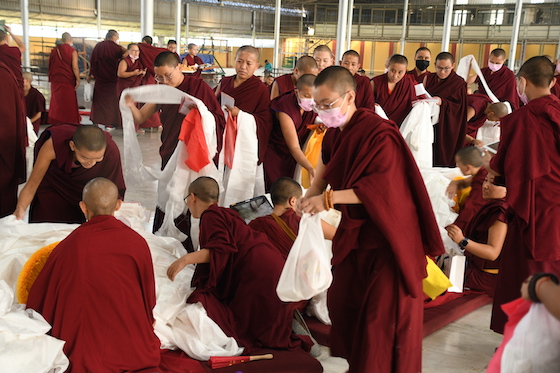
Closing Reflection
When you hold a Khata, feel the smoothness of its silk threads — each one woven with centuries of faith and compassion.
It carries with it the voices of pilgrims, the prayers of monks, and the hopes of countless generations.
A simple scarf, yes — but one that carries a thousand blessings.
Explore more at Everest Art Studios:


