

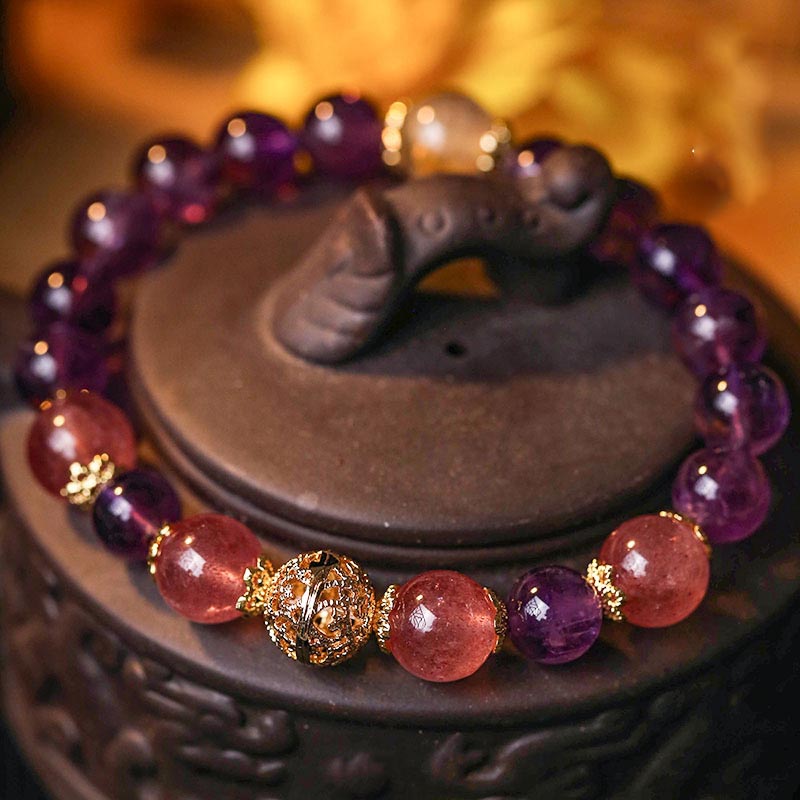
Citrine is the warm yellow-to-orange member of the quartz family and one of the most popular stones in bead bracelets. Not all citrine looks the same, though, and the label alone does not tell you everything. This guide explains the main differences and how to choose.
What citrine is
Citrine is quartz coloured yellow, golden or orange. It is a fairly hard stone, about 7 on the Mohs scale, so it handles daily wear well. Naturally yellow quartz is relatively uncommon, which is why much of the citrine on the market has been treated.
Natural vs heat-treated citrine
Natural citrine
Untreated citrine is usually pale to medium yellow, sometimes with a light smoky or champagne tone. The colour tends to be soft and fairly even through the stone.
Heat-treated citrine
A large share of citrine sold today is amethyst or other quartz that has been heated, which turns purple quartz yellow to deep orange. Heated material often shows stronger orange or reddish-brown tones. Heat treatment is a long-established practice in the gem trade, and the result is still quartz; it simply should be described honestly.
What about imitations?
Yellow glass and dyed stones are sometimes sold as citrine. Glass may show tiny round bubbles and feels warmer to the touch than quartz. Dye can collect in surface cracks as darker lines.
Choosing a citrine bracelet
- Colour: pale lemon yellow looks light and fresh; golden and honey tones are warmer and stand out more.
- Mixed bracelets: citrine is often paired with amethyst, rutilated quartz or clear crystal. Check the Material line on the product page to see every stone used.
- Metal parts: spacer beads may be brass, copper or sterling silver. If you have a metal sensitivity, check this before buying.
- Meaning: in modern crystal traditions citrine is commonly linked with optimism and abundance. These are cultural beliefs, not medical or financial claims.
Citrine pieces in our shop
Bracelets and a pendant that include citrine. See the Citrine collection.


Getting the size right
Measure your wrist with a soft tape just above the wrist bone, then add about 1 cm (0.4 in) for a comfortable fit. Our elastic citrine bracelets come in inner sizes from 15 to 18 cm (5.9 to 7.1 in), for wrists of about 14 to 17.5 cm (5.5 to 6.9 in). If you are between sizes, choose the larger one.
Caring for citrine
- Keep it out of long, strong direct sunlight and away from high heat; some citrine can fade over time.
- Wipe with a soft cloth, or rinse briefly in lukewarm water and let it dry flat. Avoid chemicals and perfume.
- Take the bracelet off before swimming, showering and sleeping to protect the elastic cord.
- Store it separately from softer stones, since quartz can scratch them.


