

How to Set Up a Buddhist Altar at Home (Step-by-Step)
Creating a Buddhist altar at home is one of the most meaningful ways to cultivate mindfulness, devotion, and peace in daily life. A well-arranged altar not only provides a sacred space for practice but also serves as a visual reminder of the Buddha’s teachings and compassion.
Below is a simple, step-by-step guide to help you set up your own home altar.
Step 1: Choose a Suitable Location
Select a quiet, clean, and undisturbed area — ideally a separate room or a peaceful corner of your home.
Avoid placing the altar directly facing bedrooms, kitchens, or bathrooms, as these are considered less auspicious. It is also best to have a solid wall behind the altar for stability and support.
Step 2: Prepare the Altar Table
The altar table should be waist-high or higher as a sign of respect.
Choose a table that is stable, tidy, and proportional to your space. You may cover it with a clean yellow or red cloth, colors symbolizing wisdom and merit in Buddhist tradition.
Step 3: Enshrine the Buddha Statue
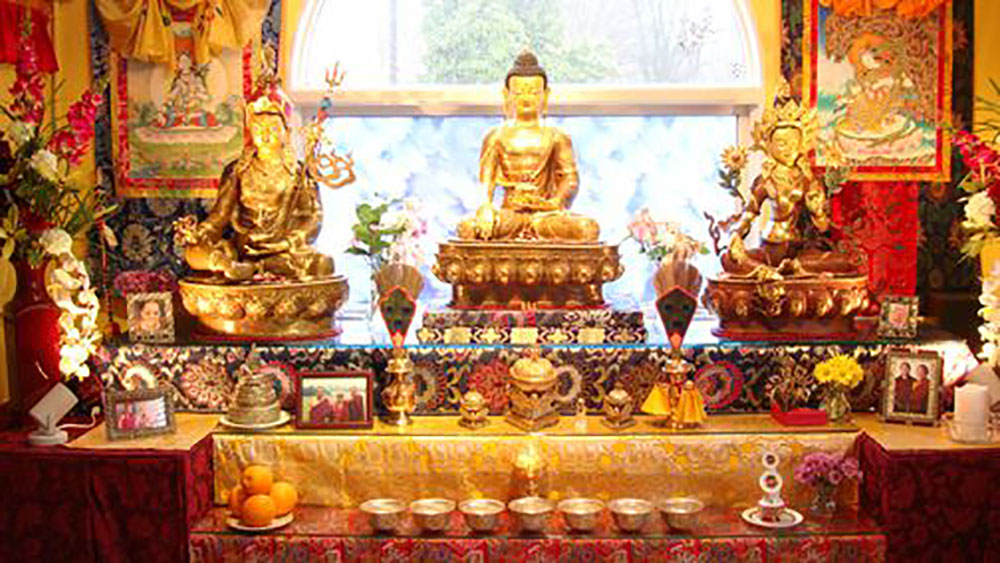
Select one or more Buddha statues corresponding to your practice — for example:
-
Shakyamuni Buddha for general practice
-
Amitabha Buddha for Pure Land devotion
-
Chenrezig (Avalokiteshvara) for compassion practice
Place the main statue in the center at the highest position, ideally facing the main door or window.
If multiple statues are displayed, ensure the central figure is slightly elevated above the others.
Step 4: Arrange the Offerings
Offerings are a symbolic act of gratitude and reverence. A traditional arrangement includes:
-
Incense Burner – placed directly in front of the Buddha statue.
-
Offering Cups – three cups of clean water, arranged neatly in front of the incense burner.
-
Lamps or Candles – one on each side of the incense burner, representing wisdom and the dispelling of ignorance.
-
Fresh Offerings – such as flowers, fruits, or light snacks, placed neatly in front as an expression of devotion.

Step 5: Final Touches and Daily Practice
You may add sutras, prayer beads, or sacred texts on either side of the altar.
Place a cushion or mat in front of the altar for comfortable bowing or meditation.
Keep the area clean and uncluttered, and consider hanging Buddhist art, thangkas, or calligraphy to enhance the sacred ambiance.
When your altar is ready, join your palms and bow three times, reciting:
“Namo Ben Shi Shakyamuni Buddha”
(“Homage to the Original Teacher, Shakyamuni Buddha”)
Perform daily offerings — refreshing the water and lighting incense in the morning and evening. Remember, the sincerity of your heart is far more important than the external form of offerings.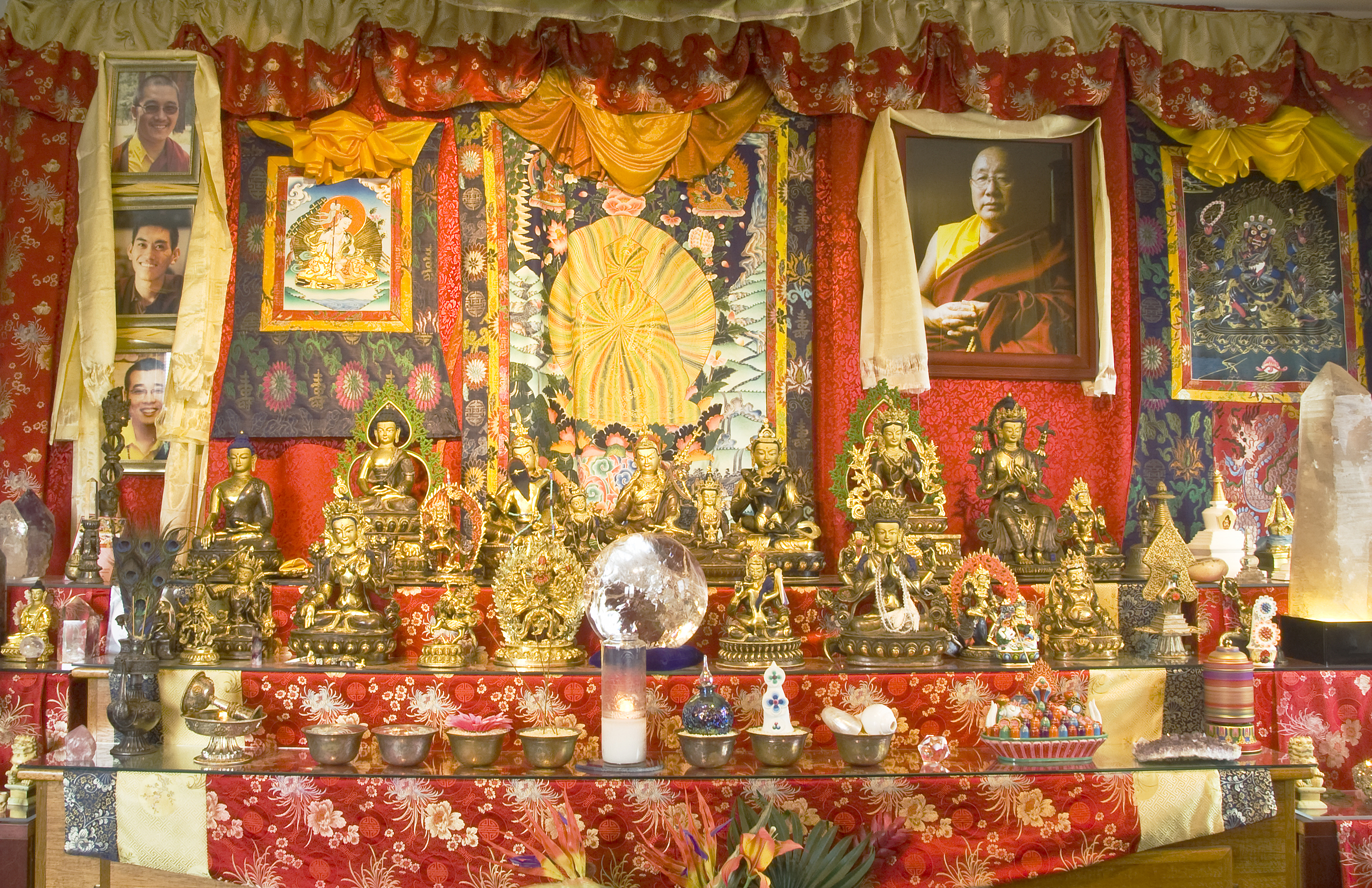
Final Blessing
May your home Buddhist altar become a sacred refuge —
a place of calm, clarity, and devotion, guiding you toward greater inner peace and wisdom.
Explore more at Everest Art Studios: