

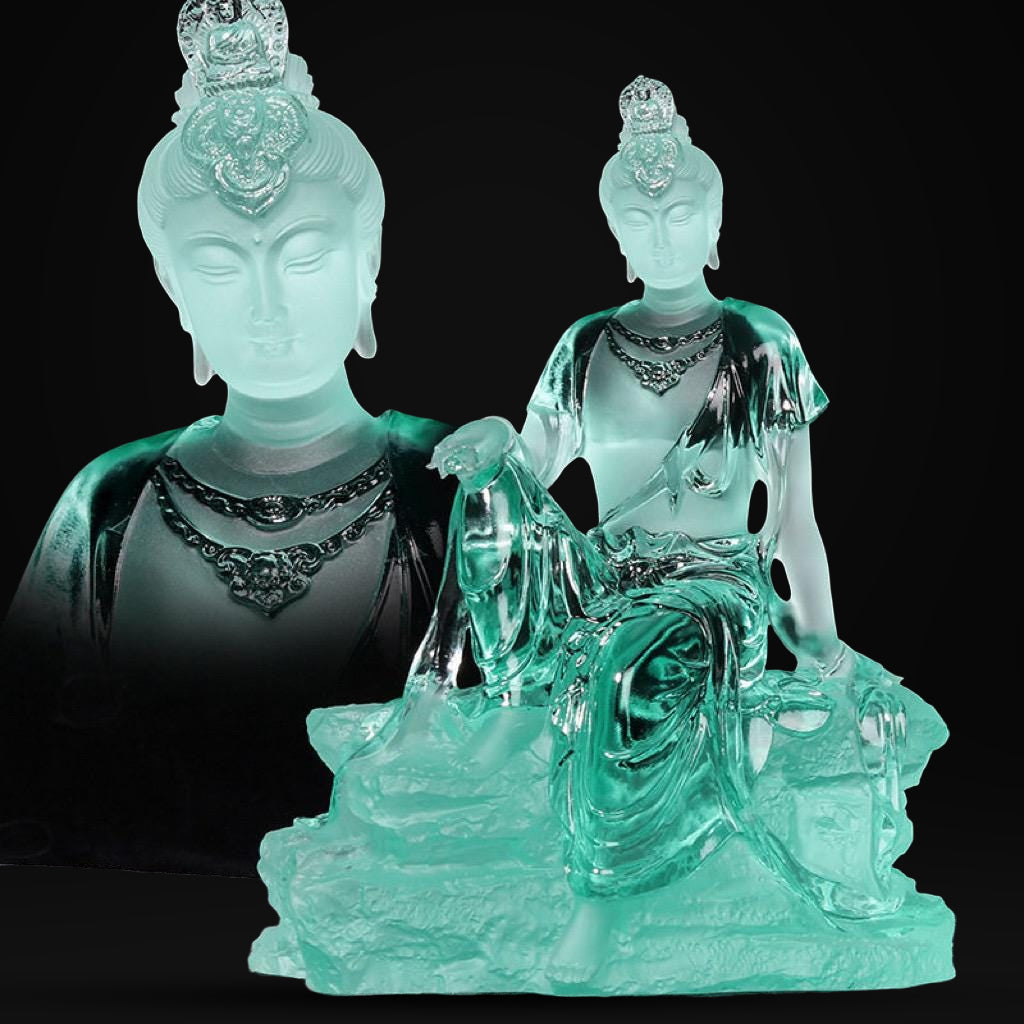
Liuli statues glow when light passes through them, which makes them a striking alternative to metal on a home altar. The word liuli is Chinese for coloured glass or glaze, and it has a long association with Buddhism. This guide explains what liuli is, how to recognise good pieces and how to look after them.
What liuli is
Today, liuli usually means coloured glass cast in a kiln, often using a lost-wax method. A model is carved in wax, encased in a heat-resistant mould and melted out; pieces of coloured glass are then placed in the mould and slowly melted in a kiln before a long, gradual cooling. Because the colours flow as they melt, no two pieces are exactly alike.
The word also has a Buddhist echo. In Chinese, the Medicine Buddha's full name includes liuli, usually rendered in English as "lapis lazuli light", and liuli appears in some lists of the seven treasures. A common explanation is that this is why liuli feels fitting for sacred images. You can read more about the Medicine Buddha in our guide to Amitabha and the Medicine Buddha.
How to recognise good liuli
- Weight and feel: cast glass feels heavy and cool. Resin copies are noticeably lighter and warmer to the touch.
- Translucency: hold it to a window or lamp. Liuli shows depth, with colour shifting through the piece.
- Small bubbles and swirls: tiny bubbles and colour streaks are a normal sign of the kiln process, not a fault.
- Clean surfaces: well-finished pieces have polished faces and no sharp mould seams.
Liuli Statues and Altar Pieces
Kiln-cast liuli deities and ritual objects. Browse more in our Buddha Statue collection.


How to choose a liuli piece
Size and setting
- Under 5 cm (2 in): desk or car ornaments, such as our mini Yellow Jambhala at 4.3 cm (1.7 in).
- About 10 to 25 cm (4 to 10 in): shelf and home-altar statues.
- About 30 cm (12 in) and above: a centrepiece where the statue can be lit from behind.
Colour and light
Clear and pale colours glow best with light behind them, so they suit a window ledge or a backlit shelf. Deep colours such as black, purple or dark blue look richer under soft front lighting and suit wrathful deities like Mahakala, explained in our Mahakala statue guide.
Liuli or metal
Liuli brings colour and a sense of light; brass and gilded copper are tougher and more traditional for Tibetan altars. Our guide to Buddha statue materials compares the metal options.
Liuli is also used for altar objects such as incense burners, for example our liuli Boshan censer, 8.5 to 13.3 cm (3.3 to 5.2 in) tall.
Caring for liuli
- Glass can chip or crack if knocked, so place it away from shelf edges and busy walkways.
- Avoid sudden temperature changes, such as moving it from a cold window straight into hot sun.
- Dust with a soft brush; when needed, wipe with a soft, slightly damp cloth and dry it. Avoid abrasive or harsh cleaners.
- Lift it with both hands, supporting the base, never by an arm or ornament.
With a little care, a liuli statue keeps its clarity and colour for generations.


