

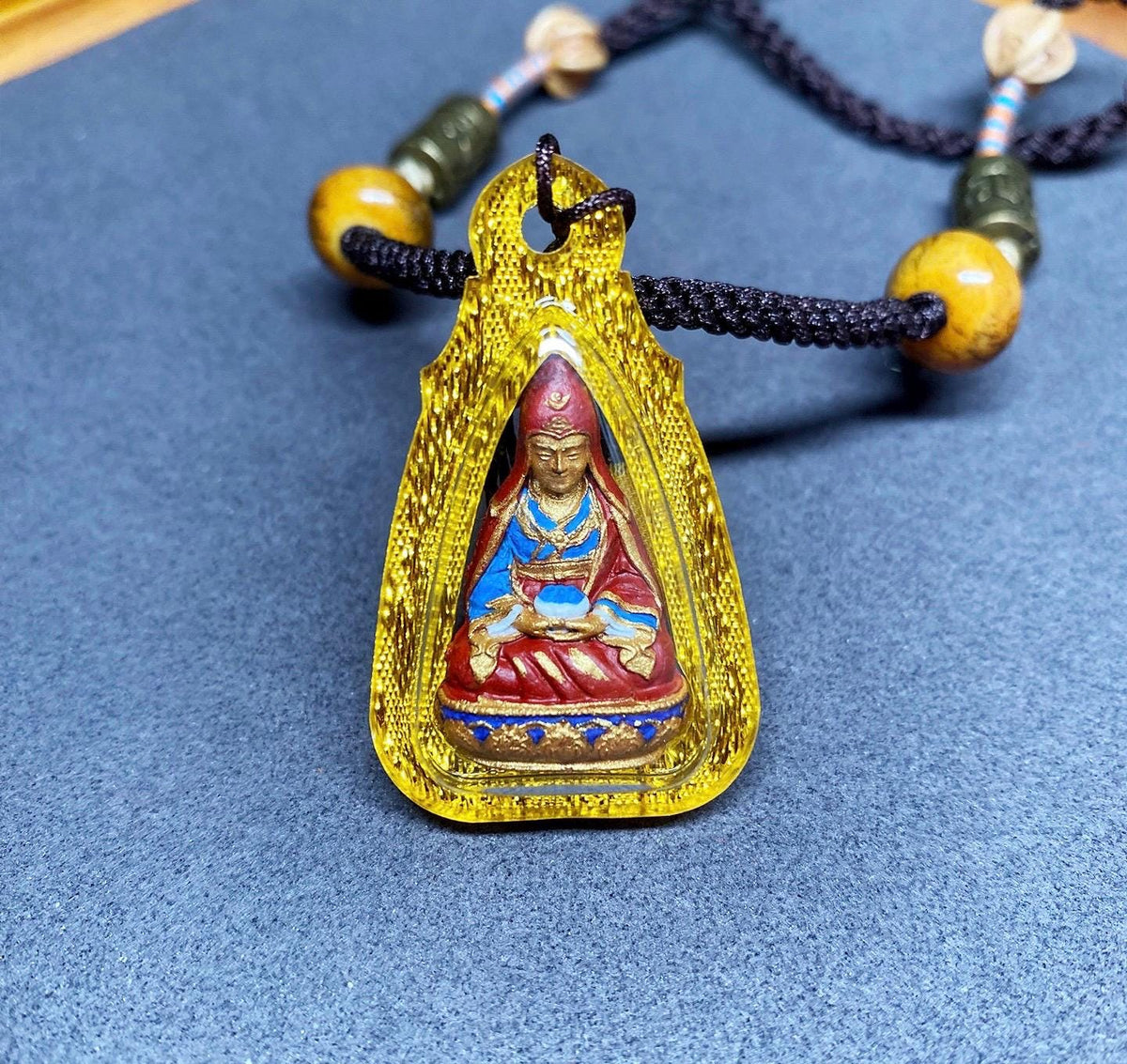
A tsa tsa pendant is a small clay image, often hand-painted like a miniature thangka, set in a gau box or sealed case so it can be worn. The hardest part of choosing one is usually the figure. This guide covers the deities you will see most often and what each is traditionally associated with. For the basics of what a tsa tsa is, read what is a tsa tsa.
Peaceful buddhas and bodhisattvas
- Medicine Buddha: deep blue, seated, holding a bowl and a sprig of the myrobalan plant. Commonly associated with healing and wellbeing.
- Green Tara: green, seated with her right leg stepping forward. Associated with swift help and protection from fear. See Green Tara vs White Tara.
- Four-Armed Chenrezig (Avalokiteshvara): white, with two hands joined at the heart. The bodhisattva of compassion, linked with the mantra Om Mani Padme Hum.
- Manjushri: raising a flaming sword, with a book on a lotus. Associated with wisdom and study.
- Guru Rinpoche: seated, wearing a lotus hat, holding a vajra and a skull cup. Widely revered in Tibet.
Wealth deities
- Yellow Jambhala: round and seated, holding a mongoose that spits jewels. The most common wealth deity, associated with generosity and prosperity.
- Black Jambhala: a dark, wrathful standing form, also holding a mongoose.
- Vaisravana: a guardian king in armour, riding a snow lion, holding a victory banner and a mongoose.
Hand-painted tsa tsa pendants
Buddhas, wealth deities and protectors from our Tsa Tsa collection.


Protectors and wrathful deities
- Six-Armed Mahakala: dark blue, fierce, with six arms. A principal Dharma protector. White Mahakala, a white six-armed form, is linked with wealth.
- Yamantaka (Vajrabhairava): buffalo-headed and many-armed; traditionally the wrathful form of Manjushri.
- Hayagriva: red, with a small green horse head in the hair; a wrathful form linked with Avalokiteshvara.
- Vajrakilaya: holds a phurba; associated with removing obstacles.
- Palden Lhamo: a fierce female protector riding a mule.
Many people wear wrathful figures simply as protective images. Some traditions treat certain deities as practice deities taken up with a teacher, so if you follow a lineage, ask your teacher.
Clay, paint and case
- Clay: many tsa tsas are pressed from medicinal clay, sometimes mixed with incense ash. Mixed-colour clay gives a marbled look.
- Paint: hand-painted pieces use mineral pigments and gold, so each one varies slightly.
- Case: a sealed acrylic or laser-cut case protects the clay from sweat and water and suits daily wear. A silver or brass gau box looks more traditional but needs gentler handling.
- Size: check the product page. As an example, our Vajrasattva mandala pendant is 4.6 cm (1.81 in) across.
Care
Take the pendant off before showering or swimming, even if the case is sealed, and keep it away from perfume. Wipe the case with a dry cloth. When not worn, keep it somewhere clean and raised, such as an altar or a pouch. For more on cases, see what is a gau box.


